






CBSOFT Panel
Trends and Challenges in Software Architecture
Mediator: Paulo Borba (UFPE)Room: Ondina C
29 Sept, 17:00 - 18:30
Topics
- Doubts about the concept of "the architecture" of a software system - Alex Wolf
- Architectures for Families - David Weiss
- Dynamic architectures and their software engineering support for developing safe applications - Flavio Oquendo
- Ways in which we can adapt to the constant barrage of changing requirements - Joe Yoder
- Understanding and leveraging framework architectures - Jonathan Aldrich
- Agile architecture myths - Rebecca Wirfs-Brock
The Panelists
Alexander Wolf
 Alexander L. Wolf is a professor in the Department of Computing at Imperial College London (UK). He also holds an affiliated appointment in the Department of Computer Science at the University of Colorado at Boulder (US).
Prof. Wolf received the B.A. degree from Queens College of the City University of New York, majoring in both Geology and Computer Science. He received the M.S. and Ph.D. degrees from the Department of Computer Science at the University of Massachusetts at Amherst. Prof. Wolf was a Member of the Technical Staff at AT&T Bell Laboratories (now AT&T Labs Research and Bell Laboratories) in Murray Hill, New Jersey, before joining the University of Colorado faculty. During his years at the University of Colorado, Prof. Wolf held the ranks of assistant, associate, and full professor. He also held the Charles Victor Schelke Chair in the College of Engineering. At the University of Lugano he helped found the Faculty of Informatics, the first computer science faculty in the Italian-speaking region of Switzerland.
Prof. Wolf's research interests are directed toward the discovery of principles and development of technologies to support the engineering of large, complex software systems. He has published in the areas of software engineering, distributed systems, networking, security, and database management.
Prof. Wolf serves as Chair of the Association for Computing Machinery (ACM) Special Interest Group (SIG) Governing Board (SGB) and is a member of the Executive Committee (EC) of the ACM Council, the governing authority of the 95000-member professional association. He chairs the ACM Software System Award committee and is a member of the ACM Europe Council. Prof. Wolf serves on the editorial boards of the IEEE Computer Society journal Transactions on Software Engineering (TSE) and the Research Highlights section of ACM's flagship publication Communications of the ACM (CACM).
He is a participant in the ACM Distinguished Speakers Program (DSP). Prof. Wolf previously served as Vice Chair and then Chair of the ACM Special Interest Group in Software Engineering (SIGSOFT), on the editorial boards of the ACM journal Transactions on Software Engineering and Methodology (TOSEM) and the Wiley journal Software Process - Improvement and Practice (SPIP), and has chaired a number of international program committees.
Prof. Wolf is a Fellow of the ACM, a Chartered Fellow of the British Computer Society (BCS), holder of a Royal Society-Wolfson Research Merit Award, and recipient of an ACM SIGSOFT Research Impact Award.
Alexander L. Wolf is a professor in the Department of Computing at Imperial College London (UK). He also holds an affiliated appointment in the Department of Computer Science at the University of Colorado at Boulder (US).
Prof. Wolf received the B.A. degree from Queens College of the City University of New York, majoring in both Geology and Computer Science. He received the M.S. and Ph.D. degrees from the Department of Computer Science at the University of Massachusetts at Amherst. Prof. Wolf was a Member of the Technical Staff at AT&T Bell Laboratories (now AT&T Labs Research and Bell Laboratories) in Murray Hill, New Jersey, before joining the University of Colorado faculty. During his years at the University of Colorado, Prof. Wolf held the ranks of assistant, associate, and full professor. He also held the Charles Victor Schelke Chair in the College of Engineering. At the University of Lugano he helped found the Faculty of Informatics, the first computer science faculty in the Italian-speaking region of Switzerland.
Prof. Wolf's research interests are directed toward the discovery of principles and development of technologies to support the engineering of large, complex software systems. He has published in the areas of software engineering, distributed systems, networking, security, and database management.
Prof. Wolf serves as Chair of the Association for Computing Machinery (ACM) Special Interest Group (SIG) Governing Board (SGB) and is a member of the Executive Committee (EC) of the ACM Council, the governing authority of the 95000-member professional association. He chairs the ACM Software System Award committee and is a member of the ACM Europe Council. Prof. Wolf serves on the editorial boards of the IEEE Computer Society journal Transactions on Software Engineering (TSE) and the Research Highlights section of ACM's flagship publication Communications of the ACM (CACM).
He is a participant in the ACM Distinguished Speakers Program (DSP). Prof. Wolf previously served as Vice Chair and then Chair of the ACM Special Interest Group in Software Engineering (SIGSOFT), on the editorial boards of the ACM journal Transactions on Software Engineering and Methodology (TOSEM) and the Wiley journal Software Process - Improvement and Practice (SPIP), and has chaired a number of international program committees.
Prof. Wolf is a Fellow of the ACM, a Chartered Fellow of the British Computer Society (BCS), holder of a Royal Society-Wolfson Research Merit Award, and recipient of an ACM SIGSOFT Research Impact Award.
David Weiss
 David M. Weiss received the B.S. degree in Mathematics in 1964 from Union College, and the M.S. in Computer Science in 1974 and the Ph.D. in Computer Science in 1981 from the University of Maryland. He is currently the Lanh and Oahn Nguyen professor of software engineering at Iowa State University.
Previously, he was the Director of the Software Technology Research Department at Avaya Laboratories, where he worked on the problem of how to improve the effectiveness of software development in general and of Avaya's software development processes in particular. To focus on the latter problem, he formed and led the Avaya Resource Center for Software Technology.
Before joining Avaya Labs, he was the head of the Software Production Research Department at Lucent Technologies Bell Laboratories, which conducted research on how to improve the effectiveness of software development. Prior to Bell Labs, he was Director of the Reuse and Measurement Department of the Software Productivity Consortium (SPC), a consortium of 14 large U.S. aerospace companies. Before SPC Dr. Weiss spent a year at the Office of Technology Assessment, where he was co-author of a technology assessment of the Strategic Defense Initiative. During the 1985-1986 academic year he was a visiting scholar at The Wang Institute and for many years was a researcher at the Computer Science and Systems Branch of the Naval Research Laboratory (NRL), in Washington, D.C. He has also worked as a programmer and as a mathematician. Dr. Weiss is a senior member of the IEEE.
Dr. Weiss's principal research interests are in the area of software engineering, particularly in software development processes and methodologies, software design, and software measurement. His best known work is the goal-question-metric approach to software measurement, his work on the modular structure of software systems, and his work in software product-line engineering as a co-inventor of the Synthesis process, and its successor the FAST process. He is co-author and co-editor of two books: Software Product Line Engineering and Software Fundamentals: Collected Papers of David L. Parnas. Papers on which he has been co-author have three times won retrospective awards, twice from the IEEE and once from the ACM.
David M. Weiss received the B.S. degree in Mathematics in 1964 from Union College, and the M.S. in Computer Science in 1974 and the Ph.D. in Computer Science in 1981 from the University of Maryland. He is currently the Lanh and Oahn Nguyen professor of software engineering at Iowa State University.
Previously, he was the Director of the Software Technology Research Department at Avaya Laboratories, where he worked on the problem of how to improve the effectiveness of software development in general and of Avaya's software development processes in particular. To focus on the latter problem, he formed and led the Avaya Resource Center for Software Technology.
Before joining Avaya Labs, he was the head of the Software Production Research Department at Lucent Technologies Bell Laboratories, which conducted research on how to improve the effectiveness of software development. Prior to Bell Labs, he was Director of the Reuse and Measurement Department of the Software Productivity Consortium (SPC), a consortium of 14 large U.S. aerospace companies. Before SPC Dr. Weiss spent a year at the Office of Technology Assessment, where he was co-author of a technology assessment of the Strategic Defense Initiative. During the 1985-1986 academic year he was a visiting scholar at The Wang Institute and for many years was a researcher at the Computer Science and Systems Branch of the Naval Research Laboratory (NRL), in Washington, D.C. He has also worked as a programmer and as a mathematician. Dr. Weiss is a senior member of the IEEE.
Dr. Weiss's principal research interests are in the area of software engineering, particularly in software development processes and methodologies, software design, and software measurement. His best known work is the goal-question-metric approach to software measurement, his work on the modular structure of software systems, and his work in software product-line engineering as a co-inventor of the Synthesis process, and its successor the FAST process. He is co-author and co-editor of two books: Software Product Line Engineering and Software Fundamentals: Collected Papers of David L. Parnas. Papers on which he has been co-author have three times won retrospective awards, twice from the IEEE and once from the ACM.
Flavio Oquendo
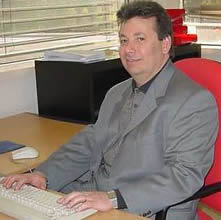 Flavio Oquendo is a Professor of Computer Science at the University of South Brittany, France, where he leads the ArchLog group on formal approaches to software architectures and software processes in service-oriented computing in the VALORIA Research Lab.
He received the B.Eng. degree from ITA, Sao Paulo, and the M.Sc., Ph.D., and H.D.R. (Research Direction Habilitation) degrees from Grenoble, in Computer Science. Before joining the University South Brittany in 2005, Prof. Oquendo held appointments in Computer Science & Software Engineering as Full Professor at the University of Savoie at Annecy (9 years) and Associate/Assistant Professor at the University of Grenoble (5 years). Previously, he was a member of the R&D Staff at the G.I.E. Emeraude [R&D group on advanced software engineering created by BULL, Thomson-Syseca (now THALES IS), and Eurosoft (now part of AT&T Europe)] in Paris (5 years).
Prof. Oquendo has over 25 years experience in Research & Development. He has actively participated in 10 European R&D Projects and managed or directed several of them. Support for his research has mainly come from these European Commission's R&D grants and collaborative industrial contracts.
Prof. Oquendo has published over 150 refereed journal and conference papers in the fields of Software Architecture, Software Process, Computer-Assisted Software Engineering, and Software Object Databases. He is listed among the most prolific authors in the DBLP computer science bibliography. He has served on Program Committees of c.a. 70 International Conferences and Workshops, has chaired 10 of them, and has act as referee for c.a. 15 International Journals.
Prof. Oquendo's research interests are centred on languages and technologies to support the efficient design and engineering of large-scale software-intensive systems. His current research interests include formal description and development techniques for software architecture and process modelling, analysis, transformation/refinement, and evolution and their applications in industrial settings, especially based on the service-oriented computing paradigm. Fields of application include the engineering of all kinds of software-intensive systems operating in predictable or unpredictable environments.
Flavio Oquendo is a Professor of Computer Science at the University of South Brittany, France, where he leads the ArchLog group on formal approaches to software architectures and software processes in service-oriented computing in the VALORIA Research Lab.
He received the B.Eng. degree from ITA, Sao Paulo, and the M.Sc., Ph.D., and H.D.R. (Research Direction Habilitation) degrees from Grenoble, in Computer Science. Before joining the University South Brittany in 2005, Prof. Oquendo held appointments in Computer Science & Software Engineering as Full Professor at the University of Savoie at Annecy (9 years) and Associate/Assistant Professor at the University of Grenoble (5 years). Previously, he was a member of the R&D Staff at the G.I.E. Emeraude [R&D group on advanced software engineering created by BULL, Thomson-Syseca (now THALES IS), and Eurosoft (now part of AT&T Europe)] in Paris (5 years).
Prof. Oquendo has over 25 years experience in Research & Development. He has actively participated in 10 European R&D Projects and managed or directed several of them. Support for his research has mainly come from these European Commission's R&D grants and collaborative industrial contracts.
Prof. Oquendo has published over 150 refereed journal and conference papers in the fields of Software Architecture, Software Process, Computer-Assisted Software Engineering, and Software Object Databases. He is listed among the most prolific authors in the DBLP computer science bibliography. He has served on Program Committees of c.a. 70 International Conferences and Workshops, has chaired 10 of them, and has act as referee for c.a. 15 International Journals.
Prof. Oquendo's research interests are centred on languages and technologies to support the efficient design and engineering of large-scale software-intensive systems. His current research interests include formal description and development techniques for software architecture and process modelling, analysis, transformation/refinement, and evolution and their applications in industrial settings, especially based on the service-oriented computing paradigm. Fields of application include the engineering of all kinds of software-intensive systems operating in predictable or unpredictable environments.
Joe Yoder
 Joe Yoder is a founder and principle of The Refactory, Inc., a company focused on software architecture, design, implementation, consulting and mentoring on all facets of software development. Joseph is an international speaker and pattern author and long standing member of The Hillside Group, a group dedicated to improving the quality of software development. He is co-author of the Big Ball of Mud pattern, which illuminates many fallacies in the approach to software architecture. Joseph has organized and participated in many international conferences including program chair for the Pattern Languages of Programming Conferences (PLoP and SugarLoafPLoP) and helping organize the first Agile Portugal. Joe has presented many tutorials and talks at many international conferences such as Agile, JAOO, QCon, PLoP, OOPSLA and ECOOP.
Joe currently resides in Urbana, Illinois where he oversees a team of developers who have constructed many systems based on enterprise architecture using the .NET environment. Other projects involve working in both the Java and .NET environments deploying Adaptive Systems or Domain-Specific Languages for clients. Joe thinks software is still too hard to change. He wants do something about this and believes that by using good patterns and by putting the ability to change software into the hands of the people with the domain knowledge seems to be some promising avenues to solve this problem.
Jonathan Aldrich
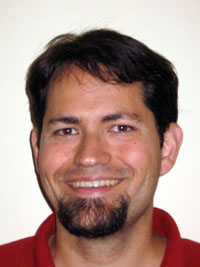 Jonathan Aldrich is Associate Professor of Computer Science at Carnegie Mellon University. He is the director of CMU's undergraduate minor program in Software Engineering, and teaches courses in software engineering and program analysis for quality and security. Dr. Aldrich joined the CMU faculty after completing a Ph.D. at the University of Washington and a B.S. at Caltech.
Aldrich's research attacks software engineering problems using programming language techniques. Topics he has addressed include
verifying architectural structure, modular formal reasoning about code, and API protocol safety. For his work on software architecture, Aldrich received a 2006 NSF CAREER award and the 2007 Dahl-Nygaard Junior Prize, given annually for a significant technical contribution to object-oriented programming. Aldrich's current work focuses on support for typestate-oriented programming and concurrency in the design of the Plaid language.
Jonathan Aldrich is Associate Professor of Computer Science at Carnegie Mellon University. He is the director of CMU's undergraduate minor program in Software Engineering, and teaches courses in software engineering and program analysis for quality and security. Dr. Aldrich joined the CMU faculty after completing a Ph.D. at the University of Washington and a B.S. at Caltech.
Aldrich's research attacks software engineering problems using programming language techniques. Topics he has addressed include
verifying architectural structure, modular formal reasoning about code, and API protocol safety. For his work on software architecture, Aldrich received a 2006 NSF CAREER award and the 2007 Dahl-Nygaard Junior Prize, given annually for a significant technical contribution to object-oriented programming. Aldrich's current work focuses on support for typestate-oriented programming and concurrency in the design of the Plaid language.
Rebecca Wirfs-Brock
 Rebecca Wirfs-Brock is an internationally recognized leader in the development of object design methodologies. She invented the set of development practices known as Responsibility-Driven Design. Among her widely used innovations are use case conversations and object role stereotypes. She is the regular design columnist for IEEE Software and the author of the classic text, Designing Object-Oriented Software. Her most recent book, Object Design: Roles, Responsibilities and Collaborations, was published in 2002.
Rebecca has written numerous articles, lectured and presented tutorials on object analysis, design and management topics. Rebecca’s methodology contributions are based upon thirty years of hands-on software development experience. Most recently she has advised an engineering group on design and architecture for a large embedded application, been a major contributor to the design and architecture of a telecommunications framework, led the development of an online banking system, and mentored teams on use case writing, design, architecture, and managing incremental and iterative object-technology projects.
Rebecca Wirfs-Brock is an internationally recognized leader in the development of object design methodologies. She invented the set of development practices known as Responsibility-Driven Design. Among her widely used innovations are use case conversations and object role stereotypes. She is the regular design columnist for IEEE Software and the author of the classic text, Designing Object-Oriented Software. Her most recent book, Object Design: Roles, Responsibilities and Collaborations, was published in 2002.
Rebecca has written numerous articles, lectured and presented tutorials on object analysis, design and management topics. Rebecca’s methodology contributions are based upon thirty years of hands-on software development experience. Most recently she has advised an engineering group on design and architecture for a large embedded application, been a major contributor to the design and architecture of a telecommunications framework, led the development of an online banking system, and mentored teams on use case writing, design, architecture, and managing incremental and iterative object-technology projects.